
Governance
Role of the Board of Directors
In 2025, MCNEX established an ESG Committee under its Board of Directors to serve as the decision-making body for managing and overseeing environmental management activities, including those related to climate change. The ESG Committee, composed of one internal director and three outside directors, deliberates on climate change-related agenda items and reviews the implementation status and performance of related activities. The ESG Management Team supports the smooth operation of the ESG Committee. The ESG Management Team identifies climate change-related issues and implements response measures in cooperation with relevant departments.
ESG Committee
No. | Date | Agenda | Resolution |
1st | March 14, 2025 | Appointment of ESG Committee Chairperson | Approved |
2nd | March 28, 2025 | Report on 2024 ESG Evaluation Results | Reported |
Report on Materiality Assessment Results and Climate Change Risk Analysis Results | Reported | ||
Approval of 2025 ESG Strategic Direction and Publication of the 2024 Sustainability Management Report | Approved | ||
3rd | December 31, 2025 | 2024 Sustainability Report Publication | Reported |
Carbon Reduction Plan Status | Reported | ||
Non-Financial Risk Monitoring Results | Reported | ||
2025 Domestic & Global ESG Assessment Results | Reported | ||
ESG Strategic Direction & Future Plans | Reported |
Role of Management
MCNEX systematically manages the climate change crisis by clearly defining the roles and responsibilities of its management in environmental management, which encompasses areas such as climate change response and biodiversity. The company's CEO holds overall responsibility for the environmental management system, including aspects related to climate change, and receives reports on key environmental issues like climate change through an annual Environmental and Safety meeting.
The company's CFO (Chief Financial Officer), who also serves as the Head of the Management Support Division, oversees ESG activities and the relevant implementation organizations concerning climate change response, safety and health, and human rights & labor. This role includes establishing environmental management-related plans and monitoring the progress of goal implementation.
Environmental and Safety Meeting
Category | Details |
Composition | Key executives centered around the CEO and heads of relevant departments |
Purpose | Review of key issues related to environment, safety, and health, and establishment of management plans |
Meeting | Annual regular meeting / Ad hoc meetings held as needed when significant environmental or safety issues arise |
Strategy
Climate Risks and Opportunities
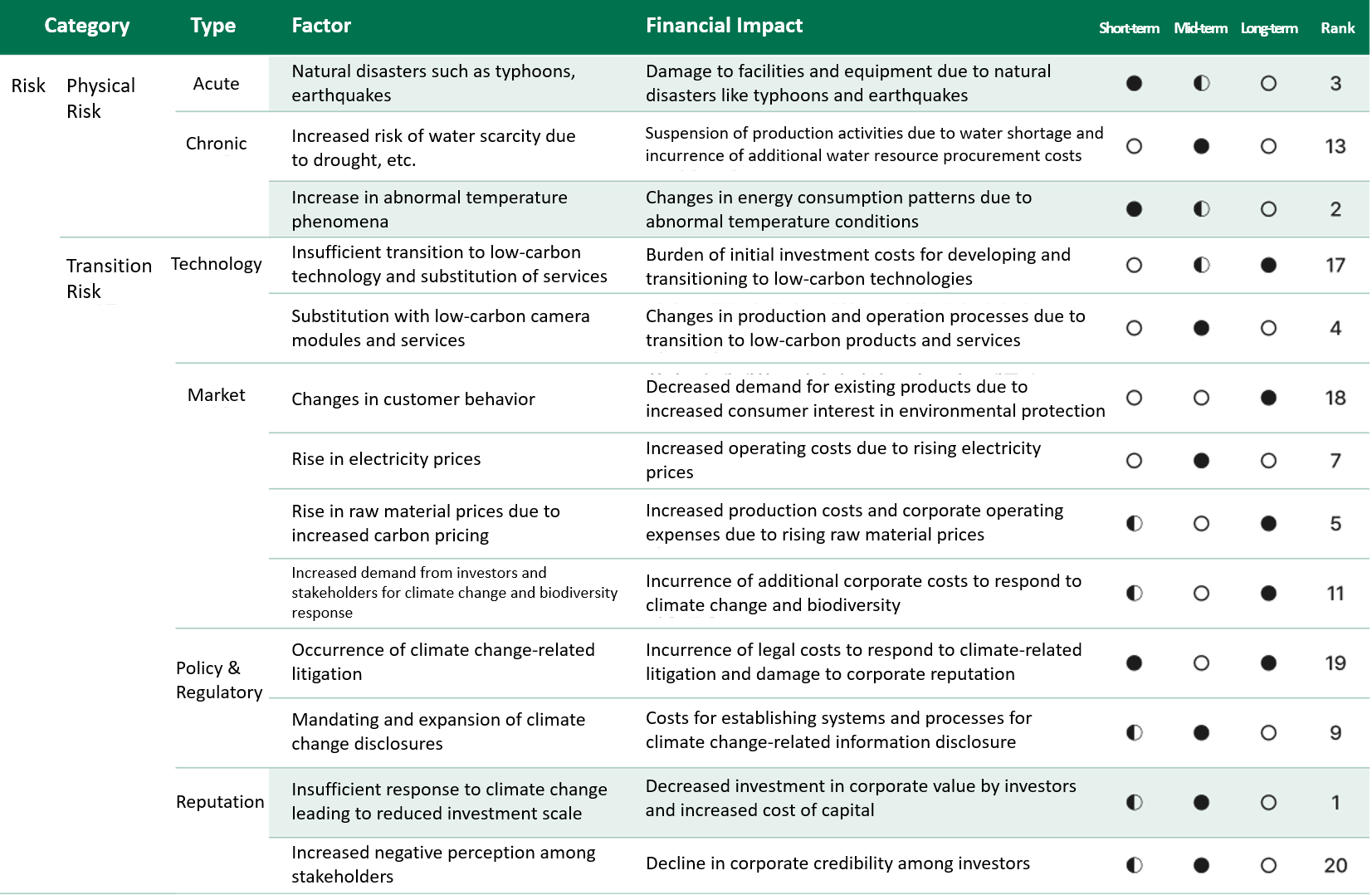
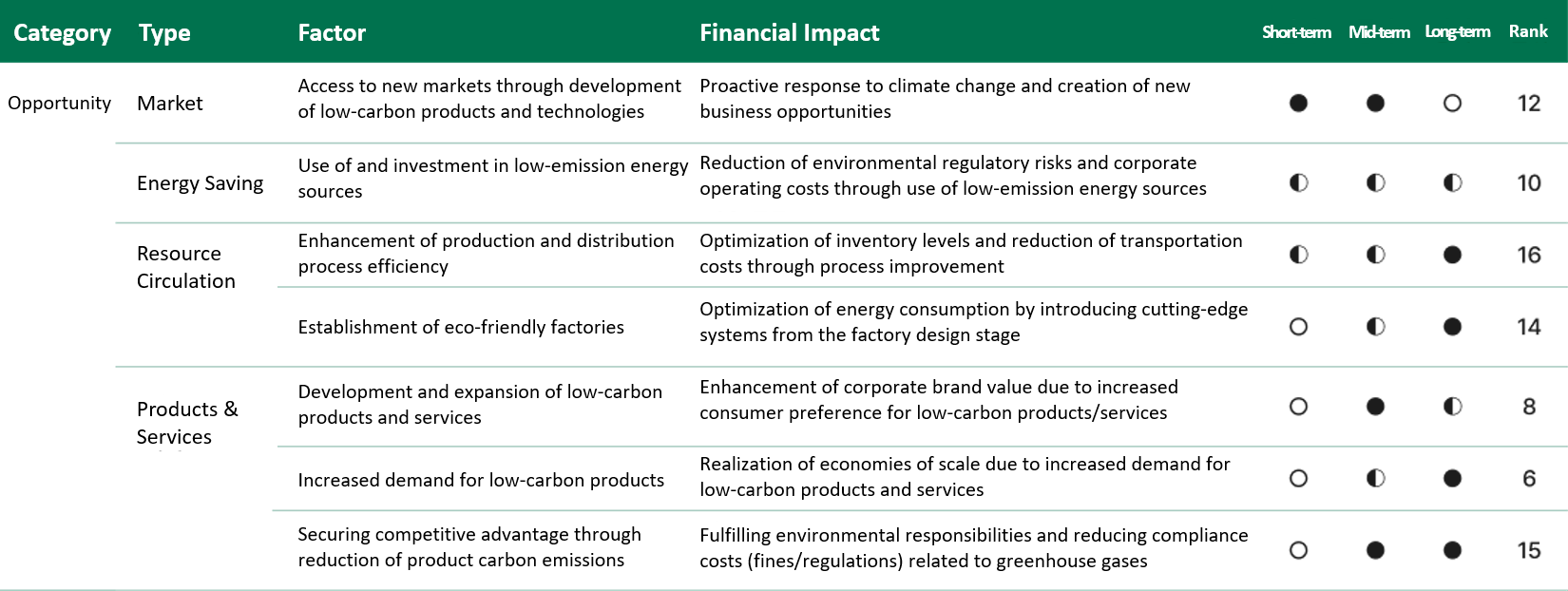
As climate change accelerates globally, the intensity and frequency of unpredictable natural disasters, such as typhoons and earthquakes, are increasing, and South Korea is no exception. Accordingly, MCNEX has conducted a climate change scenario analysis for the Incheon area in South Korea, where our domestic headquarters is located, to identify, assess, and manage climate-related risks and opportunities.
Climate change risks are categorized into acute physical, chronic physical, technology, market, policy/regulatory, and reputational risks. We evaluate their financial or strategic impacts to identify the specific risks and opportunities that significantly affect MCNEX. Through this risk analysis, we have identified three key issues as having a material impact: natural disasters like typhoons and earthquakes, the increase in extreme temperature events, and potential reductions in investment scale due to an inadequate response to climate change. We have established and are currently managing mid-to-long-term response strategies for these identified risks and opportunities.
Physical Risk
Natural disasters such as typhoons, earthquakes
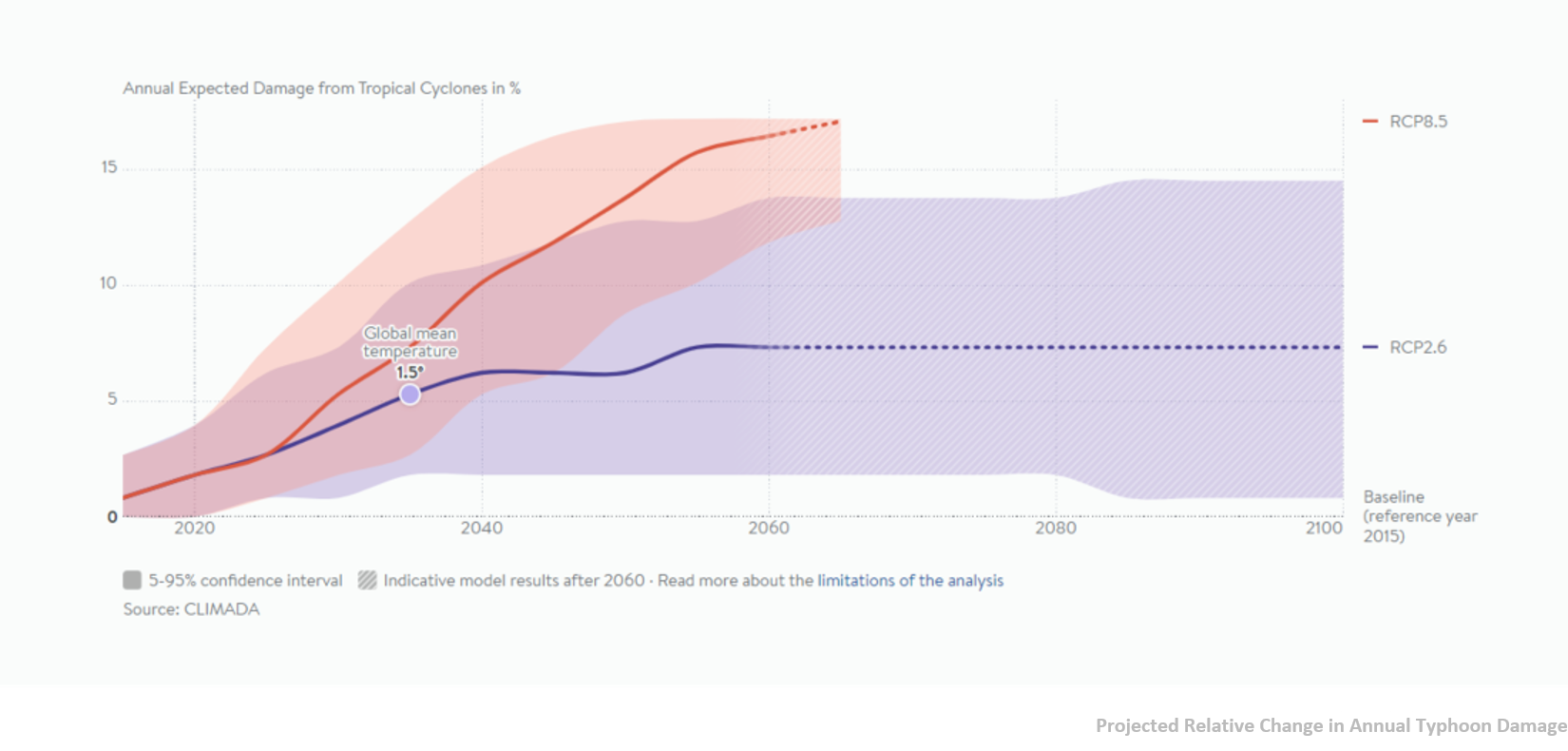
MCNEX identifies climate change-related physical risks for the Incheon region, where its headquarters is located, and is proactively responding to their major impacts. The climate change risk analysis applied the RCP 2.6 and RCP 8.5 scenarios. The RCP 2.6 scenario represents a case where atmospheric greenhouse gas concentrations are limited through global reduction efforts, while the RCP 8.5 scenario signifies a case where no such efforts are made.
According to the physical risk analysis for natural disasters under the RCP 8.5 scenario, the projected annual increase in damage to tangible assets and inventory assets, resulting from direct typhoon damage to facilities and supply chain disruptions, is expected to reach approximately 10% by 2060 and increase to 15% by 2100.
MCNEX is striving to minimize damages from extreme weather conditions by inspecting and repairing facility leaks and checking drainage systems.
※ Short-term (2025) – Monitoring and Defending Against Indirect Severe Weather
Risk Factors – Occurrence of indirect damage due to typhoons and heavy rains
Current Status & Risks: While there have been no direct typhoon strikes in the Incheon area over the past five years, strong winds and heavy rainfall due to the indirect impacts of typhoons have consistently occurred every summer.
Financial Impact: Anticipated 2–3% increase in damage costs compared to 2024 due to minor facility damage and repairs caused by strong winds.
Expected Loss: Minimum KRW 5,100,000 – Maximum KRW 5,150,000
Opportunity Factors – Cost Reduction through Preemptive Preventive System Checks
Opportunity: Based on short-term, small-scale damage data, the company can preemptively reinforce vulnerable facilities within our sites to prevent large-scale damage over the mid-to-long term.
※ Medium-term (2026–2027) – Intensification of Localized Disasters and Increased Asset Risks
Risk Factors – Damage to Facilities and Inventory due to Localized Flooding and Strong Winds
Current Status & Risks: As the intensity of torrential downpours and typhoons escalates due to deepening climate change, the risk of localized flooding leading to inventory damage, facility destruction, and temporary supply chain disruptions within sites is rising.
Financial Impact: Financial impacts arising from increased losses on disposal of property, plant, and equipment (PPE) and valuation losses on inventories.
Expected Loss: Minimum approx. KRW 310 million – Maximum approx. KRW 620 million
Opportunity Factors – Implementation of Climate Risk Transfer Strategies
Opportunity: By optimizing disaster insurance policy terms and expanding coverage, the company can secure financial soundness to buffer immediate financial shocks in the event of physical damage.
※ Long-term (2028–2030) – Accumulation of Climate Risks and Expansion of Structural Damage
Risk Factors – Structural Increase in Financial Damage Scale due to Routine Extreme Weather Events
Current Status & Risks: Following macro climate change trends, there is a risk that the scale of damage will accumulate and escalate by around 2030 compared to the medium term.
Financial Impact: Cumulative losses incurred under the assumption that the expected increase in damage for 2030 rises by 5% compared to the medium term.
Expected Loss: Minimum approx. KRW 320 million – Maximum approx. KRW 650 million
Opportunity Factors – Advancing the Enterprise-wide Business Continuity Plan (BCP)
Opportunity: Minimizing production downtime during natural disasters through long-term investments in climate-resilient infrastructure and supply chain diversification. This will lead to a more stable supply capacity compared to competitors, thereby enhancing customer trust and creating competitive advantages.
Increase in abnormal temperature phenomena
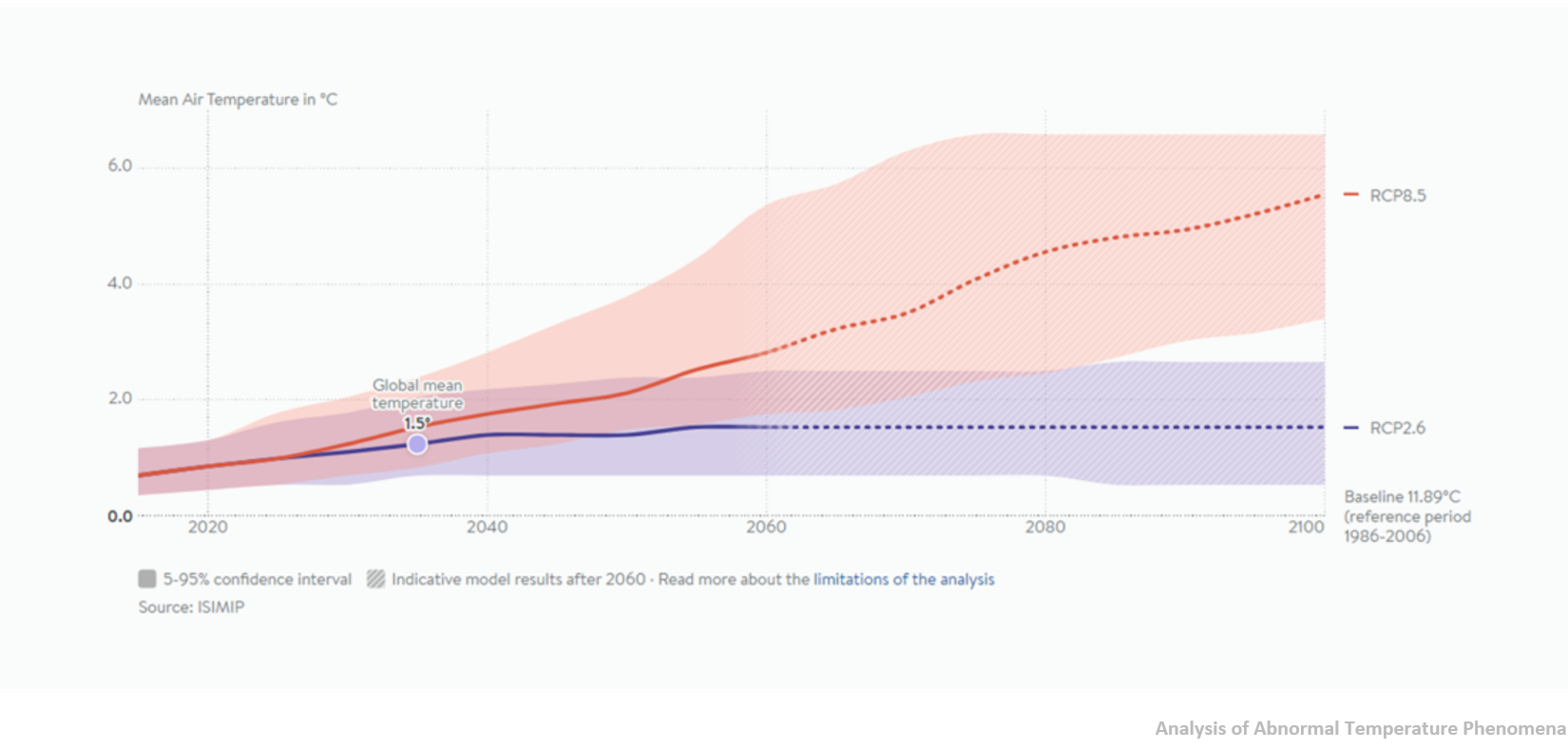
In line with the global trend of rising average temperatures, MCNEX is monitoring the projected annual temperature increases for the Incheon region in South Korea, where our headquarters is located. The risk analysis utilizes the RCP 8.5 and 2.6 scenario models. Under the RCP 8.5 scenario, temperatures in the Incheon region rise sharply. This rise in atmospheric and sea surface temperatures acts as a fundamental driver, amplifying both the probability and severity of typhoon and heavy rain risks in the region.
Natural disaster risks, such as typhoons and localized torrential downpours, necessitate additional capital expenditure (CAPEX). Furthermore, the rise in average summer temperatures and the increasing number of heatwave days directly escalate cooling energy costs at our sites, while incurring maintenance expenses due to reduced equipment efficiency in high-temperature environments. These factors ultimately increase MCNEX's operating expenses (OPEX).
Following the installation of a 105 MWh solar panel system in December 2024, MCNEX plans to install additional solar panels in 2026 to expand its renewable energy utilization rate to 8%.
※ Short-term (2025) – Maintaining and Monitoring Energy Efficiency Achievements
Risk Factors – Short-term Increase in Cooling and HVAC Power Demand Due to Rising Temperatures
Current Status & Risks: Energy consumption required to maintain optimal temperatures within sites is gradually increasing due to the rising number of heatwave days and higher average temperatures.
Financial Impact: An annual increase of approximately 3.0% in energy costs is anticipated as of 2025.
Expected Loss: Minimum approx. KRW 713 million – Maximum approx. KRW 716 million
Opportunity Factors – Cost Hedging Through Energy-Saving Activities
Opportunity: Amid a 13% increase in revenue, the company successfully capped the energy cost growth rate at around 6% through preemptive energy-saving activities. By continuously applying these internal efficiency capabilities in 2025, MCNEX can offset the cost increases driven by rising temperatures.
※ Medium-term (2026–2027) – Increased Burden of Electricity Costs Due to Accelerated Temperature Rise
Risk Factors – Acceleration of Energy Cost Growth Rates as Average Temperature Rise Begins in Earnest
Current Status & Risks: As the annual average temperature increase in the Incheon region widens under the RCP 8.5 scenario, there is a risk that energy consumption for cooling and equipment operations to offset this rise will accelerate beyond a conventional linear increase.
Financial Impact: Energy cost growth is expected to accelerate, with an annual average increase of 3.5% between 2026 and 2027.
Expected Loss: Minimum approx. KRW 759 million – Maximum approx. KRW 772 million
Opportunity Factors – Preemptive Adoption of High-Efficiency HVAC/Cooling Facilities and Process Optimization
Opportunity: By replacing aging equipment with high-efficiency devices or upgrading smart factory-based power control systems in alignment with the accelerating energy cost growth, the company can preemptively block structural cost increases and generate surplus savings.
※ Long-term (2028–2030) – Deepening Climate Risks and Structural Cost Surge
Risk Factors – Structural Surge in Power Demand and Costs Due to Routine Extreme High-Temperature Events
Current Status & Risks: In the long term, as temperature rises surpass critical thresholds, the demand for year-round cooling and equipment chilling will surge. This will impose a severe financial burden on the company's fundamental energy consumption structure.
Financial Impact: An annual average cost increase of 4.0% is expected from 2028 to 2030, with the cumulative temperature rise directly trickling down into expenditures.
Expected Loss: Minimum approx. KRW 846 million – Maximum approx. KRW 876 million
Opportunity Factors – Achieving Energy Independence by Expanding Self-Generation of Renewable Energy
Opportunity: Expanding renewable energy self-generation to hedge against the absolute increase in power usage caused by rising temperatures. This will lower dependence on the external power grid, secure financial stability against long-term energy price volatility, and serve as a driving force for the transition to Net-Zero.
Transition Risk
Insufficient response to climate change leading to reduced investment scale
The climate change crisis goes beyond a simple environmental issue, establishing itself as a key indicator for evaluating a company's long-term financial stability and growth potential. Global investors are evaluating the climate change response levels of the companies they invest in, and climate change-related risks directly influence investment decisions.
MCNEX has been requested by CDP Capital to disclose information regarding climate change and water risks, and receives ESG ratings and scores from evaluation agencies such as KCGS, Sustinvest, and S&P. Through environmental improvement activities—such as expanding the use of renewable energy, third-party verification of greenhouse gas emissions, and TCFD reporting—MCNEX achieved a B rating in CDP Climate Change in 2025.
※ Short-term (2025) – Establishing Environmental Foundation and ESG Framework
Risk Factors – Rising Electricity Costs at Domestic Sites
Current Status & Risks: Increasing energy costs due to continuous electricity rate hikes and the expanded purchase of renewable energy, such as RECs (Renewable Energy Certificates) and PPAs (Power Purchase Agreements).
Financial Impact: Additional annual cost burdens are expected in the event of a 10–15% increase in electricity rates.
Opportunity Factors – Energy Cost Reduction through the Adoption of Solar Self-Generation
Opportunity: Following the completion of the solar self-generation system installation at the headquarters in 2024, the expansion of solar facilities in 2025 is expected to reduce electricity costs and lower Scope 2 emissions.
※ Medium-term (2026–2027) – Full-scale Renewable Energy Transition and Carbon Reduction
Risk Factors – Stricter Supplier ESG Requirements from Major Clients
Current Status & Risks: With major domestic and global clients increasingly mandating the disclosure of carbon footprints and the submission of reduction targets, failure to meet the required pace of the renewable energy transition may result in business disadvantages.
Financial Impact: There is a high probability of revenue decline and subsequent stock price drops if client supply chain ESG standards are not met.
Opportunity Factors – Accelerating Global Renewable Energy Transition through Solar Panel Installation at MCNEX VINA
Opportunity: With solar panels scheduled for installation at MCNEX VINA in 2026, the company will reduce Scope 2 emissions at its overseas production subsidiary and improve the group-wide renewable energy transition rate.
※ Long-term (2028–2030) – Net Zero and Comprehensive Carbon Management
Risk Factors – Response Burden to Mandatory Scope 3 Disclosures
Current Status & Risks: Mandatory measurement and management of carbon footprints across the entire supply chain are expected to be strengthened after 2030. It is necessary to establish a lifecycle carbon data management framework from parts procurement to product disposal.
Financial Impact: Increased costs for implementing and operating Scope 3 measurement and management systems, along with concerns over credit rating downgrades related to climate risks in the event of an inadequate response.
Opportunity Factors – Achieving a 60% Renewable Energy Transition Rate through REC Purchases in 2030
Opportunity: Achieving a 60% renewable energy transition rate by 2030 through a combination of solar self-generation and REC purchases will enable a preemptive response to RE100-level global ESG demands.
Climate Change Risk Management
Risk Identification
To identify climate change-related risks and opportunities, MCNEX analyzed leading ESG companies, ESG disclosure regulations (such as IFRS and ESRS), and global initiatives (like GRI and TCFD), from which it identified a total of 20 risks and opportunities.
to analyze physical risks, MCNEX utilized the RCP5-8.5 and RCP1-2.6 pathways, drawn from the SSP (Shared Socioeconomic Pathway) scenario, MCNEX is preparing for potential for potential risks by analyzing factors in the Incheon region (where its headquarters is located), such as the proportion of land exposed to wild fires, projected damage from typhoons, projected average temperatures, and projected rice production.
Additionally, for its transition risk analysis, MCNEX is applying NGFS (Network for Greening the Financial System) scenarios (including NDCs, Below 2℃, and Net Zero 2050) to analyze items such as projected carbon prices and carbon emissions.
Risk Assessment
Key climate change-related risks and opportunities are identified by applying scenario analysis and materiality assessment to the initially derived set of risks and opportunities.
In conjunction with climate change risk analysis -which involved examining environment-related policy trends, benchmarking industry peers, and analyzing global ESG initiatives-surveys were conducted with stakeholders to assess financial and socio-environmental impacts.
As a result, the following were identified as key risk and opportunity factors: natural disasters (such as typhoons and earthquakes), the increasing phenomenon of abnormal temperatures, and the potential for reduced investment scale if climate change response is insufficient.
Risk Management
MCNEX conducts scenario analysis for key physical risks to proactively prepare for potential damages, and is addressing key transition risks through measures such as expanding its TCFD disclosures and participating in CDP.
In addition to these key factors, MCNEX further categorizes and manages factors requiring focused management and mid-to-long-term response factors. For each risk and opportunity factor, relevant departments, such as those for Environment Management and Technology Development, will establish and implement corresponding response strategies.
Monitoring and Improvement
The key risk and opportunity factors, identified from climate change-related material issues, are regularly monitored by the ESG Management Team (the company's dedicated sustainability management organization) for the status of responses and the implementation progress of improvement.
The results of the climate change risk assessment are reported to the ESG Committee.
Goals and Indicators
Scope 1
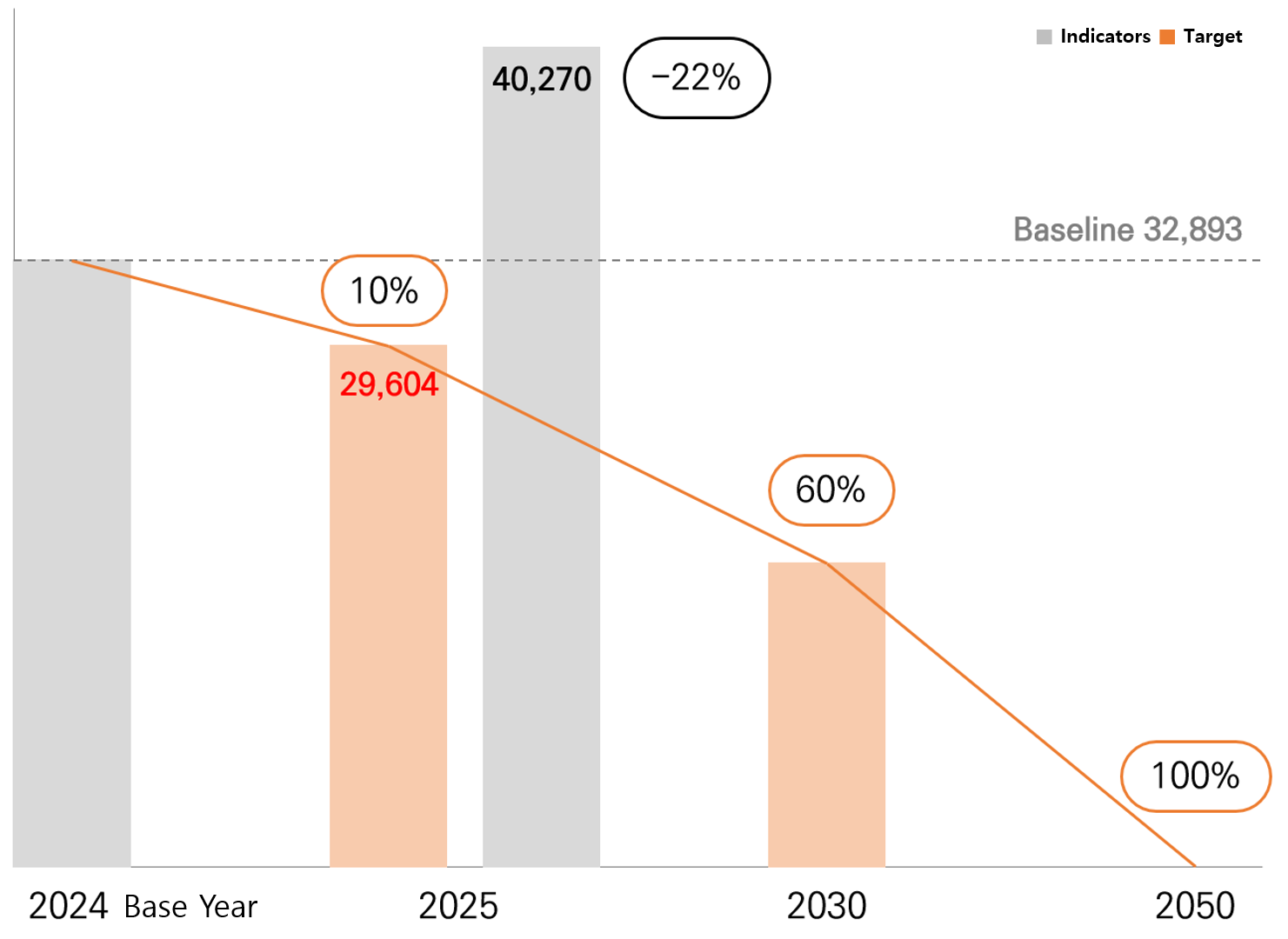
Out of its 2025 greenhouse gas (GHG) emissions, MCNEX emitted 32.6 tCO2eq from stationary combustion and 29.2 tCO2eq from mobile combustion as direct emissions (Scope 1), achieving an 18% reduction in emissions compared to the previous year.
In the case of MCNEX VINA, total Scope 1 emissions for 2025 reached 3,064.2 tCO2eq, representing a significant increase over the prior year. While the consumption of LNG, diesel, and gasoline generated from cafeterias, generators, and corporate vehicles showed no major changes compared to the previous year, the calculation of GHG emissions from refrigerant use in 2025 led to a substantial shift in Scope 1 emissions.
Scope 2
Indirect emissions (Scope 2) account for 92% of total GHG emissions and are entirely derived from electricity consumption. In 2025, MCNEX emitted 1,244.6 tCO2eq of Scope 2 emissions, while MCNEX VINA emitted 37,205.5 tCO2eq. To reduce Scope 2 emissions, which constitute the majority of the company's total emissions, solar panels were installed at the MCNEX headquarters and have been operational since 2025. These solar panels are scheduled for installation at the manufacturing subsidiary, MCNEX VINA, in 2026.
Greenhouse Gas Reduction Plan
Short-term (2025) | Mid-term (~2030) | Long-term (~2050) |
|---|---|---|
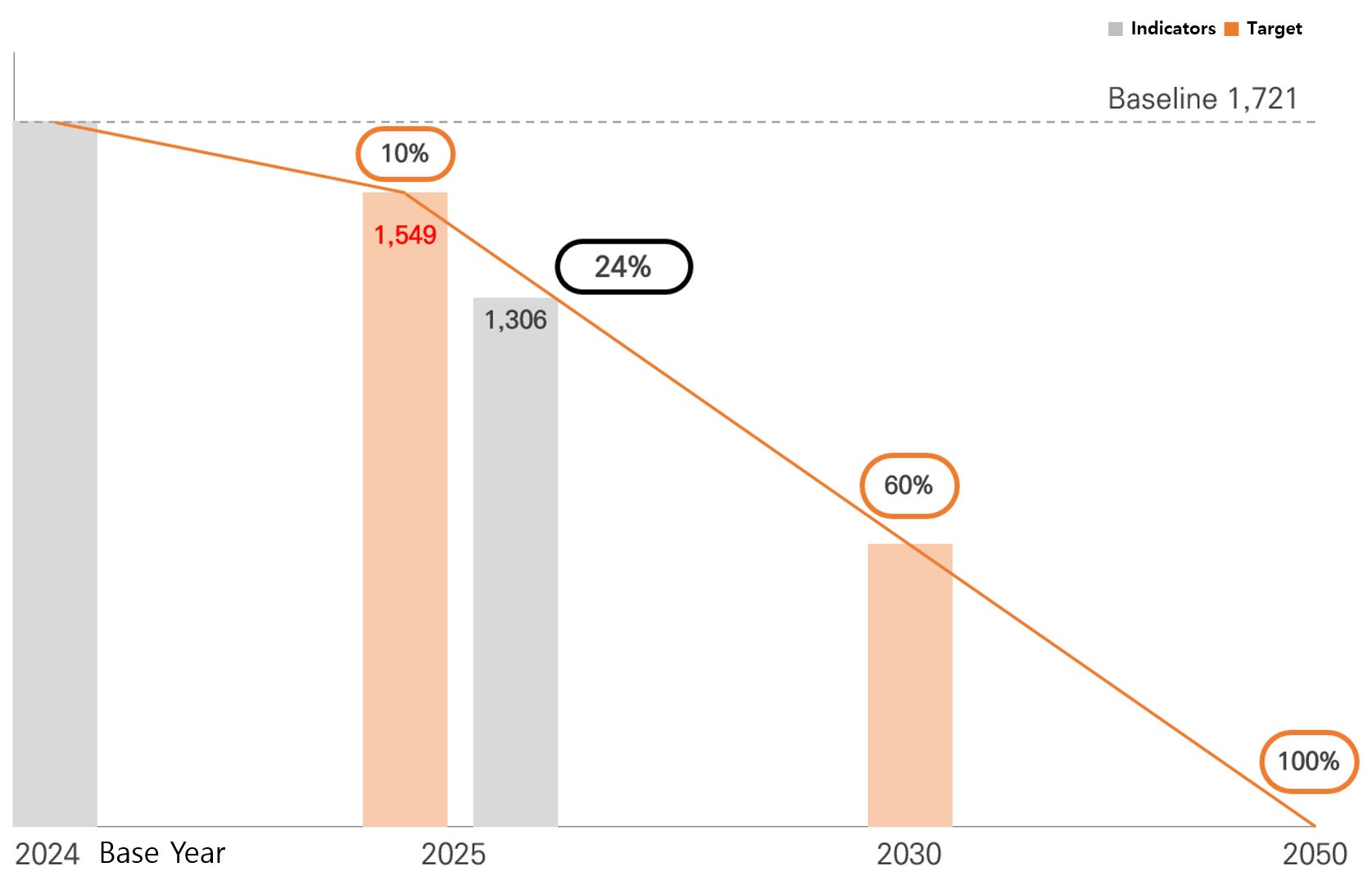
10% Reduction | 60% Reduction | 100% Reduction |
MCNEX deeply recognizes the severity of the climate change crisis and its potential impacts on the company. Accordingly, MCNEX has upgraded and strengthened its existing greenhouse gas (GHG) reduction targets, which previously aimed for a 10% reduction in Scope 1 and 2 emissions by 2030 compared to 2019. Setting 2024 as the new base year, the enhanced plan outlines specific targets to reduce Scope 1 and 2 emissions by 60% by 2030. To achieve these goals, MCNEX is driving various GHG reduction initiatives, such as tracking emissions targets and performance, transitioning to eco-friendly energy, optimizing production processes, and improving energy efficiency.
GHG Reduction Rate
MCNEX
Through initiatives such as installing CHP (Combined Heat and Power) inverters, transitioning its corporate fleet to electric vehicles, and installing solar panels, MCNEX headquarters exceeded its 2025 carbon reduction target of 10%.
MCNEX VINA
MCNEX VINA faced challenges in achieving its 2025 carbon reduction target due to a surge in electricity consumption driven by expanded production volume and rising factory utilization rates. To offset this, the subsidiary plans to establish a large-scale solar power generation facility in 2026, capable of producing approximately 7,680,000 kWh of electricity annually. Furthermore, MCNEX VINA intends to execute its carbon reduction plan by leveraging diversified renewable energy procurement methods, such as purchasing RECs.